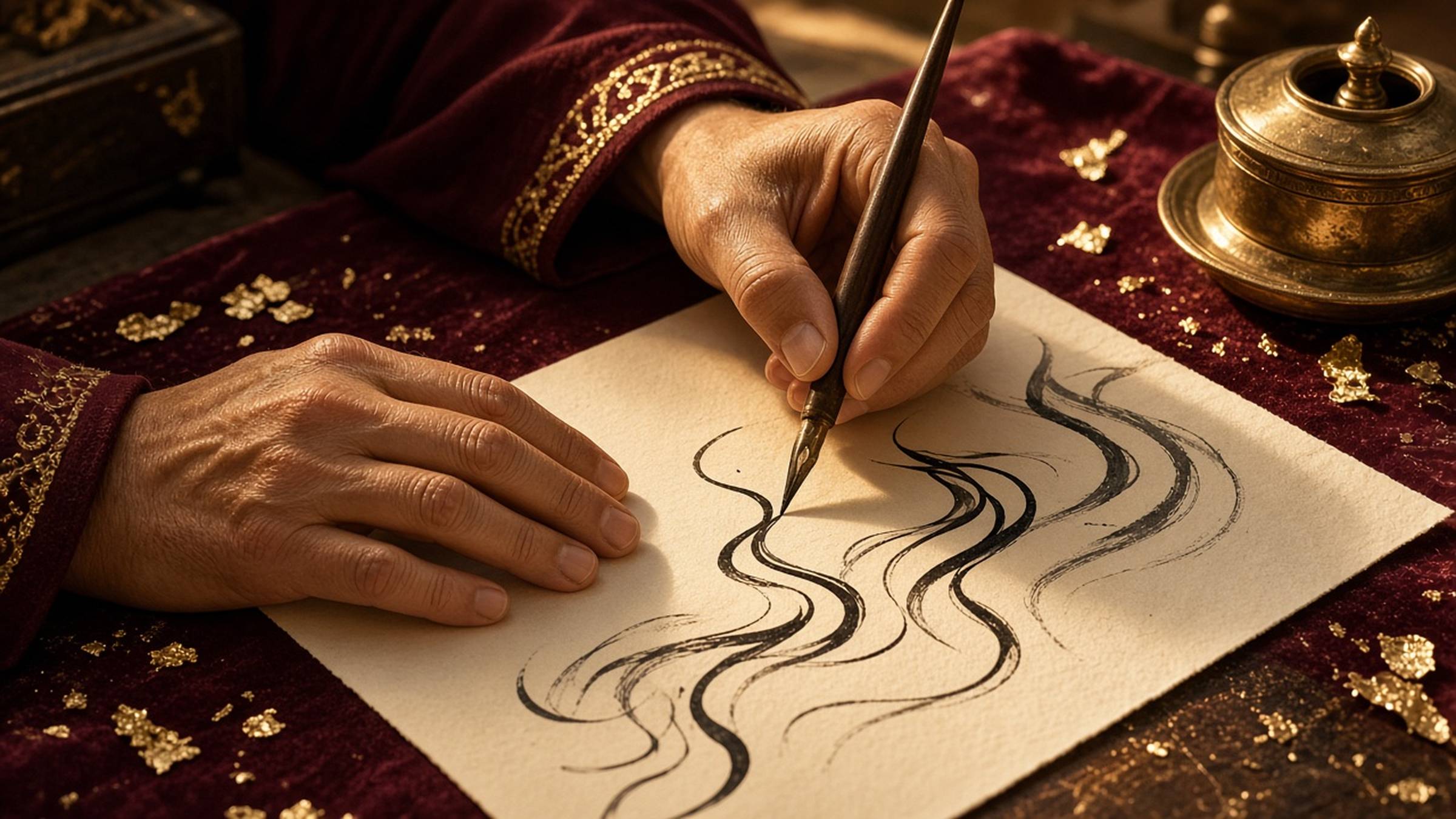
Some people doodle in the margins. Arabic calligraphers turn the margins into the main event. Across centuries and regions, from Baghdad to Cairo to Istanbul to Fez, the written word became one of the most celebrated art forms in Arabic-speaking and wider Islamic cultures, on paper, tiles, textiles, coins and walls.
You don't need to read Arabic to enjoy it. But a little context makes every curve more interesting.
1. Why the line matters so much
Arabic script is cursive by nature: most letters connect, stretch and loop. That flexibility gives calligraphers enormous room to play with proportion and rhythm. Arabic calligraphy developed into a disciplined art with rules for letter proportions, often measured in dots made by the pen itself. Yes, the ruler is the pen. Very efficient.
2. Meet a few major scripts
Think of these as different "voices" of the same alphabet:
- Kufic: angular and geometric, common in early manuscripts and architecture
- Naskh: clear and rounded, the ancestor of much everyday print
- Thuluth: tall, sweeping and dramatic, a favorite for monumental inscriptions
- Diwani: dense and swirling, associated with Ottoman chancery documents
- Maghribi: the flowing script tradition of North Africa and al-Andalus
The broader story of Islamic calligraphy shows how these styles traveled and adapted. Regional nuance matters: a manuscript from Morocco and one from Iraq can feel as different as two handwriting styles in the same family.
3. The tools are beautifully simple
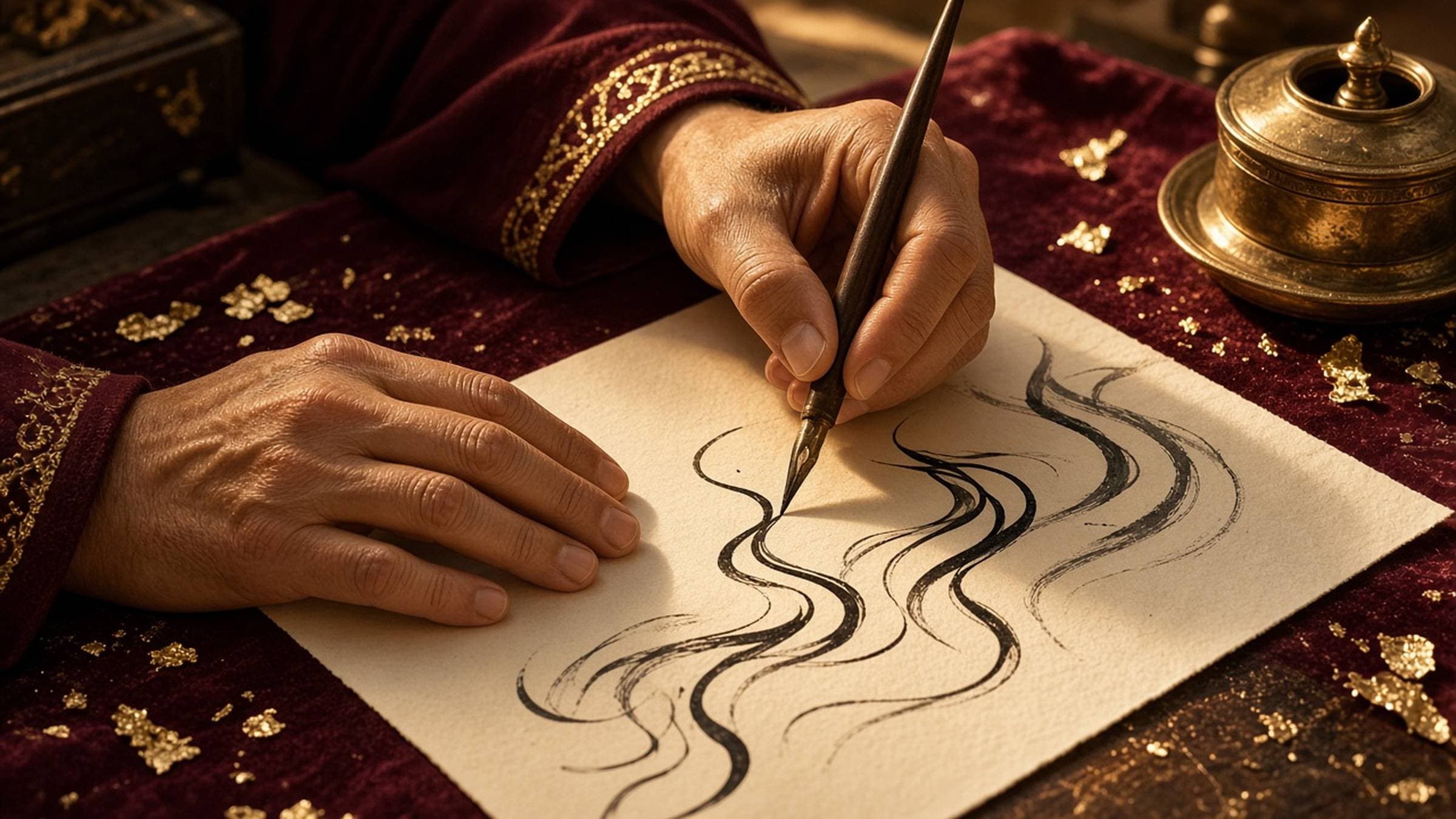
Traditional calligraphers use a qalam, a reed pen cut at an angle, plus ink and specially prepared paper. The angle of the cut shapes the thick and thin strokes. Many learn through a long, patient teacher–student relationship, copying a master's exercises again and again.
4. Calligraphy is still very much alive
Today, artists blend classical scripts with graffiti, typography and abstract painting. You'll spot Arabic lettering in brand logos, murals, album covers and tattoos (a gentle tip: ask a fluent friend before committing anything to skin).
5. Try it without pressure
Grab a chisel-tip marker and practice a single word: your name, or a favorite greeting from Midan's Phrase of the Day. Focus on rhythm, not perfection. The United Nations marks Arabic Language Day every year on 18 December, which makes a nice excuse for a little lettering session.
6. Pair art with place
Calligraphy makes more sense when you've seen it in context: over a doorway, around a dome, on a shop sign in Cairo. Midan's Field Trips take you through cultural places, and Habibi Dash fills Cairo's streets with words to spot. And if you'd like to talk through what you're seeing, a Tutor session is a friendly way to ask "what does that say?"
One stroke at a time
Calligraphy rewards slow looking. Next time you see Arabic lettering on a wall or a mug, pause and follow the line.
Further reading
- Islamic Calligraphy by Sheila S. Blair. A gorgeous, authoritative tour of the scripts and masters, the book to linger over with a cup of tea.
Some links are affiliate links; Midan may earn a small commission at no cost to you. Learn more.
If you'd like to keep exploring, Midan Shady Sphere offers a free 3-day trial plus Habibi Dash Chapter 1 (all of Cairo, levels 1–3). The full club, including Holiday Kitchen, Phrase of the Day, Diyafa, Sufra, Tutor and Field Trips, is $15/month or $150/year. Come take a look whenever you're ready.