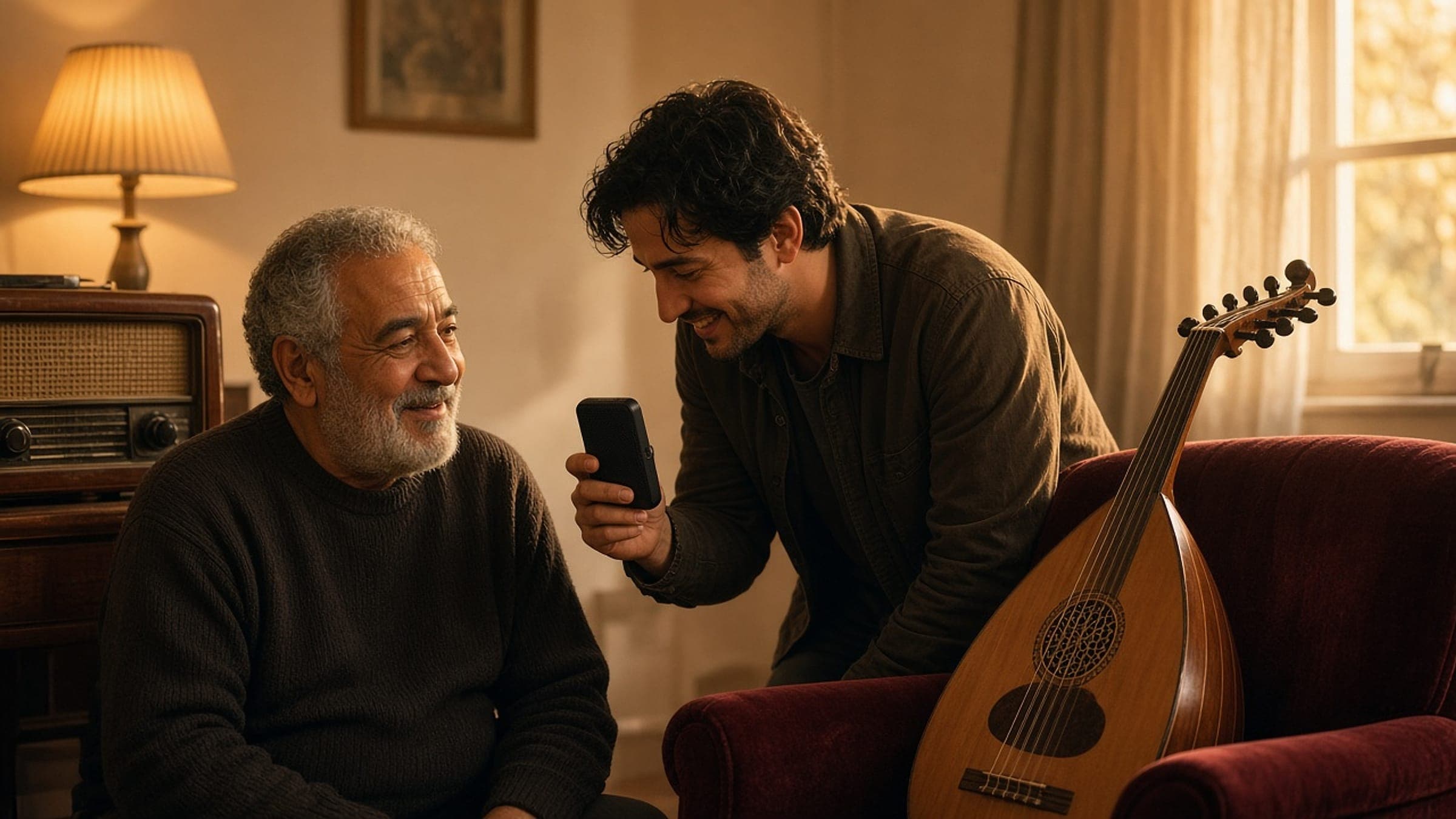

Plenty of people say they learned their best Arabic phrases from television. Some learned them from a beloved old film. Others learned them from a soap opera an aunt watched so loudly the whole building could follow the plot. Either way, the screen has long been a classroom, and a pretty entertaining one.
Here are some easy ways to turn watching into learning, with a little cultural context along the way.
1. Know why Egyptian Arabic is everywhere on screen
The cinema of Egypt has a long history, and Egyptian films and series have traveled widely across the region. That's one reason many Arabic speakers from other countries can follow Egyptian dialect, even if they don't speak it at home.
That said, screens across the region tell many stories: Syrian and Lebanese drama, Gulf comedies, North African cinema and more. Egyptian is a great starting point, not the whole picture.
2. Start with a classic
Pick one well-known film and watch it with subtitles. Directors like Youssef Chahine are a good doorway into Egyptian film history. Older films also tend to have clearer dialogue, which helps if your ear is still warming up.
Ask an older relative for their favorite. You may get a recommendation, a plot summary, and a reenactment.
3. Watch the same scene three times
A simple trick that works:
- Watch with English subtitles to understand what's happening.
- Watch with Arabic subtitles (if available) to connect sounds to words.
- Watch with no subtitles and see how much you catch.
Pick one phrase from the scene and use it that week. Midan's Phrase of the Day is a good companion here, since so much screen dialogue is everyday Egyptian Arabic.
4. Treat seasonal TV like a cultural event
In many households, certain times of year come with their own TV traditions, like series families watch together after evening meals during Ramadan. Not every household observes the same customs, and that's fine. If you're invited to watch with friends, it's a lovely way to see what people care about, laugh at the same jokes, and ask what you missed.
5. Follow the festivals
Film festivals are a great way to discover new voices. The Cairo International Film Festival is one of the region's best-known, and its lineups are a good list of films to look for later.
6. Make it social
Watching is more fun with company. Start a monthly movie night with friends, rotate who picks, and bring snacks from that film's region. Sufra has ideas for mixing dishes from different traditions, and Diyafa covers the hosting part.
If a line keeps tripping you up, the club Tutor can help, and Field Trips let you explore the places you keep seeing on screen.
Roll credits
Watching TV isn't a shortcut to fluency, but it's a real way to hear how people actually talk, laugh and argue. And it's probably the only homework that comes with popcorn.
Further reading
- Reel Bad Arabs by Jack G. Shaheen. An eye-opening look at how Hollywood has portrayed Arabs, and why representation on screen matters.
Some links are affiliate links; Midan may earn a small commission at no cost to you. Learn more.
Midan Shady Sphere offers a free 3-day trial plus Habibi Dash Chapter 1, which takes you through Cairo, a city you've likely seen in a few films already. The full club is $15/month or $150/year. Have a look around whenever you're ready.