If you've ever been told "just a quick visit" and left three hours, two meals and one bag of leftovers later, congratulations: you've experienced diyafa, hospitality. Across the Arab world, welcoming a guest is less a chore than a point of pride. The details change from a Bedouin tent to a Cairo apartment to a Detroit living room, but the instinct is the same: you came, so you're ours now.
Our first post touched on hospitality as an everyday habit. This one zooms in on the etiquette, the little signals that make guests feel at ease and hosts feel appreciated.
1. The welcome is a phrase, not just a door
"Ahlan wa sahlan" is the classic welcome, roughly "you're among family, on easy ground." The friendly reply is "ahlan beek" (to a man) or "ahlan beeki" (to a woman) in Egyptian Arabic. Levantine and Gulf speakers have their own versions, and you'll hear plenty of "marhaba" too.
Midan's Phrase of the Day is a low-stakes way to collect these greetings with pronunciation help, so your first "ahlan" lands softly.
2. Know the room you're walking into
In much of the Gulf, a majlis, a sitting room for receiving guests, is where conversation, news and coffee happen. Elsewhere, the "majlis" might be the good sofa nobody sits on except on Eid. Either way, a few gentle habits travel well: follow your host's lead on where to sit and whether to remove shoes, greet the eldest people in the room first, and don't rush into business before the small talk.
3. Understand the "three offers" dance
Many guests politely decline the first offer of food or drink. Many hosts politely ignore that. It's a friendly dance, not a test. If you want something, accept graciously on the second offer. If you truly don't, a warm "shukran, alhamdulillah" (thanks, I'm full, praise God) said with a hand on your heart usually closes the loop. Expect at least one more attempt anyway.
4. Coffee has its own little grammar
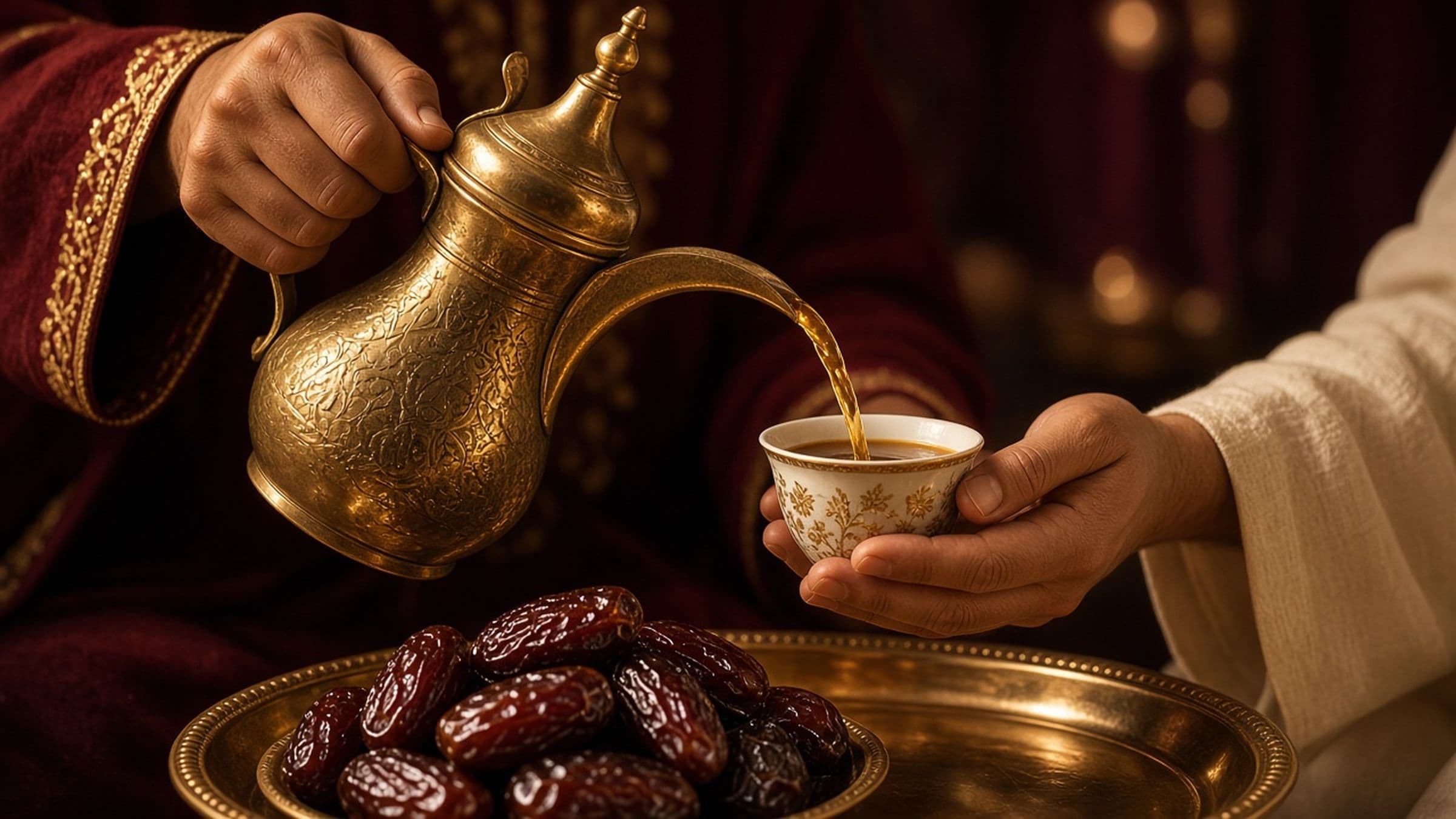
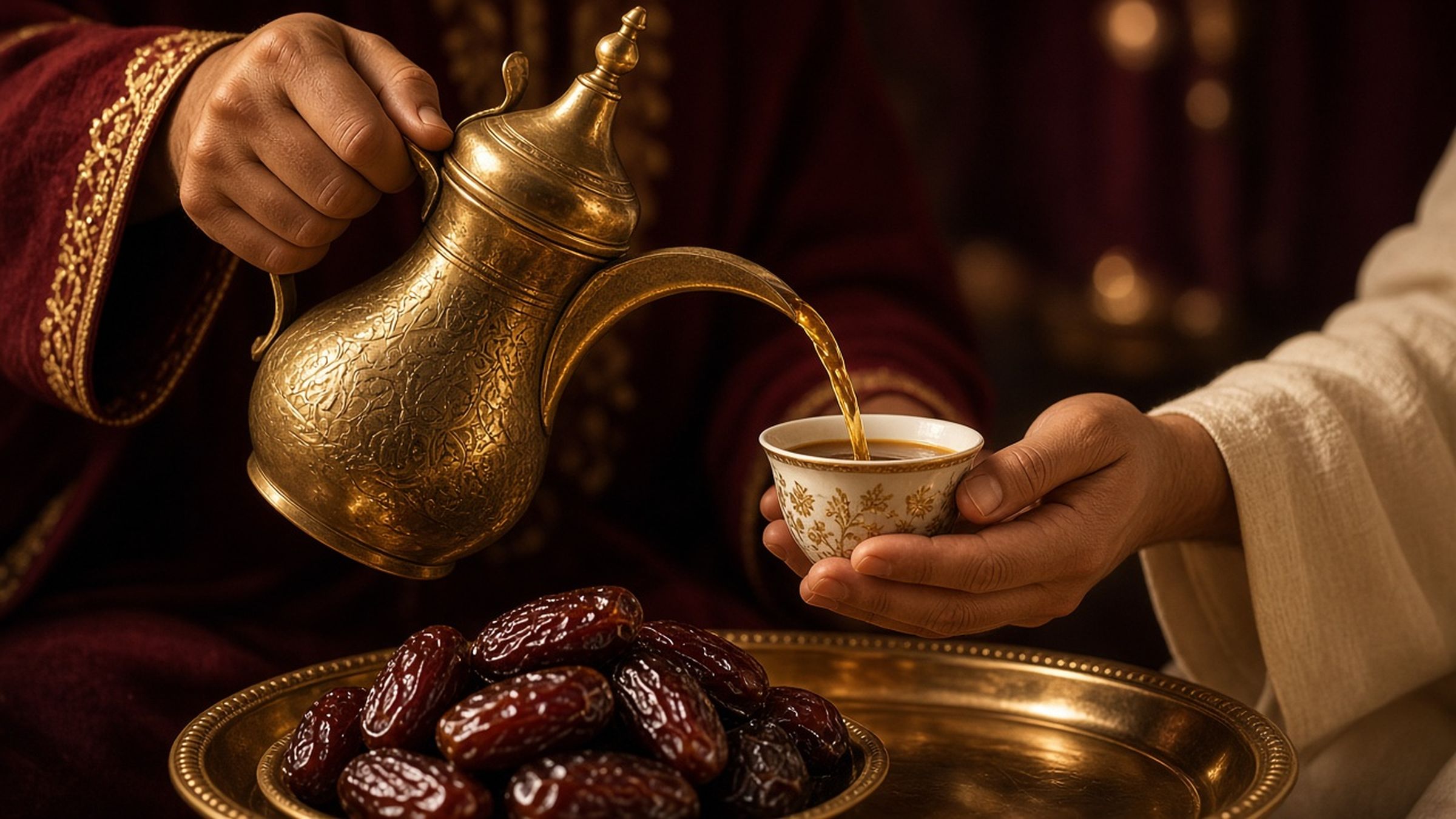
In parts of the Gulf, light, cardamom-scented Arabic coffee is poured in small cups, often with dates, and refilled until the guest gives a gentle shake of the cup to signal "I'm done." Customs vary by country and family, so if you're unsure, ask. Hosts usually love explaining. (We go deeper on coffee and tea in an upcoming post.)
5. Don't arrive empty-handed, and don't leave that way either
Sweets, fruit or flowers are classic gifts. And don't be surprised if your container comes back full. Returning a dish empty is, in many households, practically unthinkable.
6. Hosting? Borrow the spirit, not a script
You don't need a majlis to host well. Greet people at the door, offer a drink before they can ask, check that everyone has eaten, and make the newest person feel like a regular. For menu ideas with stories attached, Teta Malika's Holiday Kitchen is a lovely place to start, and Sufra has ideas for tables that mix traditions.
Midan's Diyafa feature walks through hospitality customs from the first greeting to the final "you're leaving already?", with the phrases to match.
Your seat is ready
Diyafa isn't about perfect manners. It's about making room. Bring curiosity, accept the second cup, and say "tislam eedik" (bless your hands) to whoever cooked.
If you'd like to keep exploring, Midan Shady Sphere offers a free 3-day trial plus Habibi Dash Chapter 1 (all of Cairo, levels 1–3). The full club, including Holiday Kitchen, Phrase of the Day, Diyafa, Sufra, Tutor and Field Trips, is $15/month or $150/year. Come on in whenever you're ready.