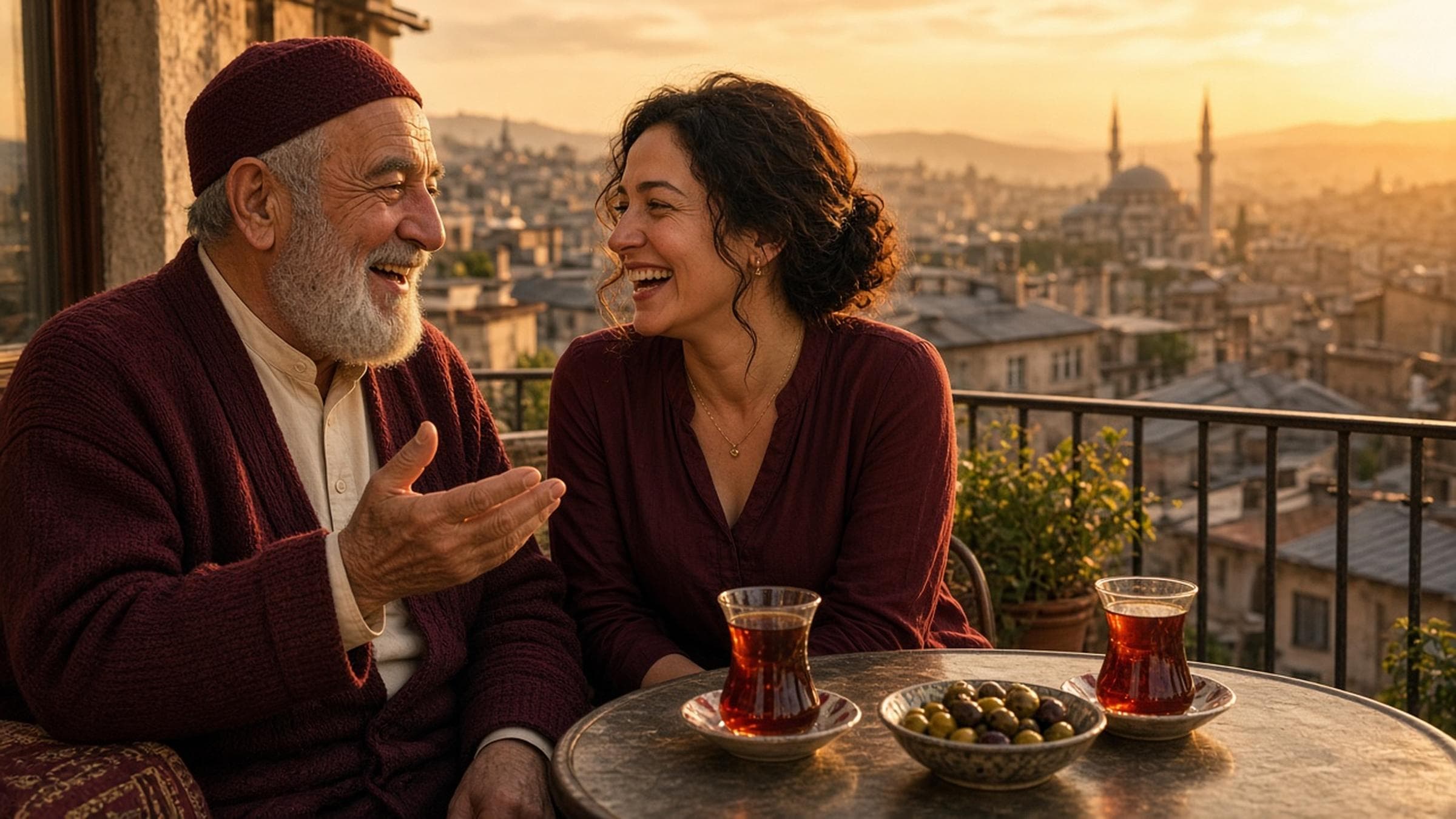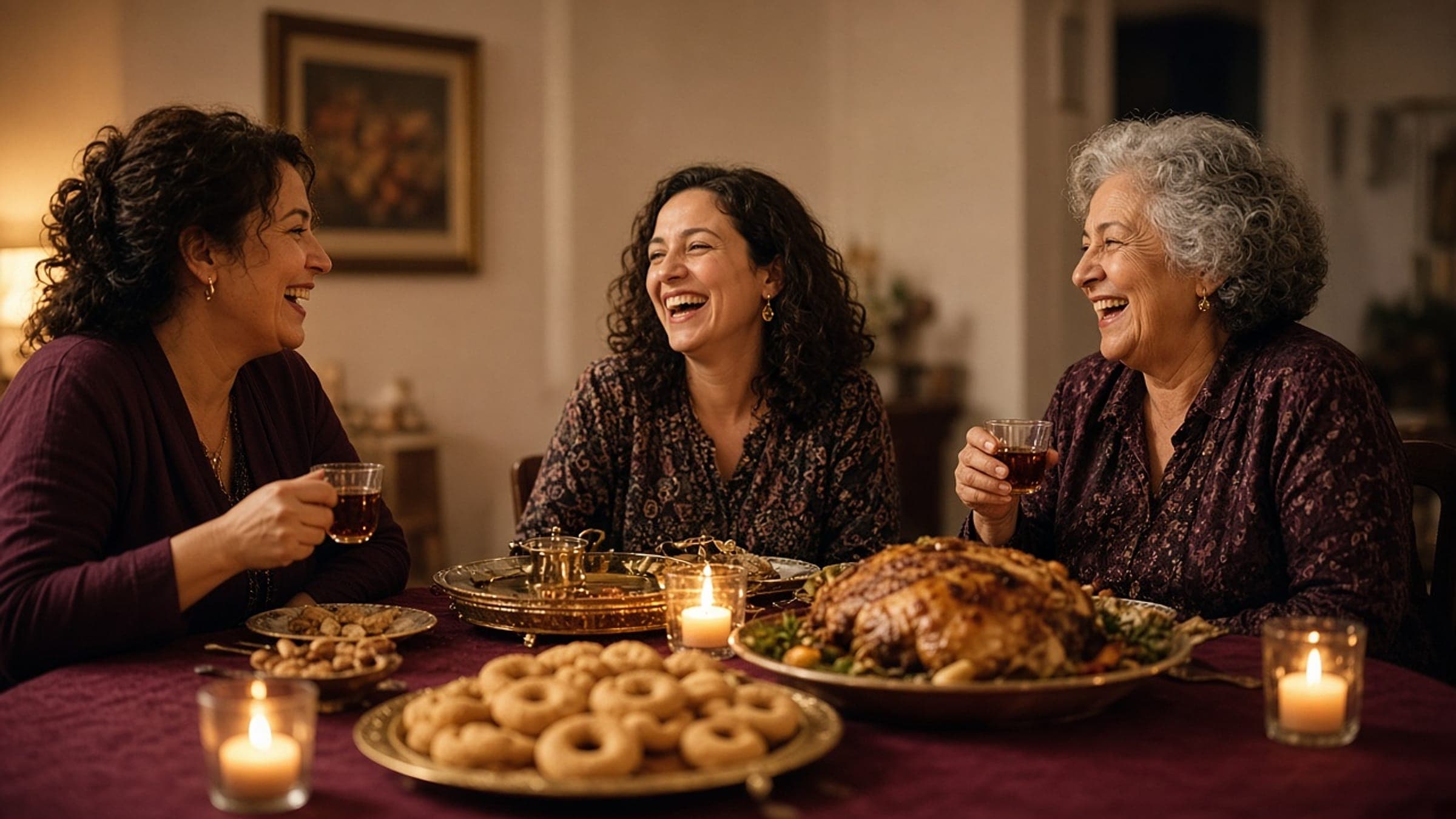
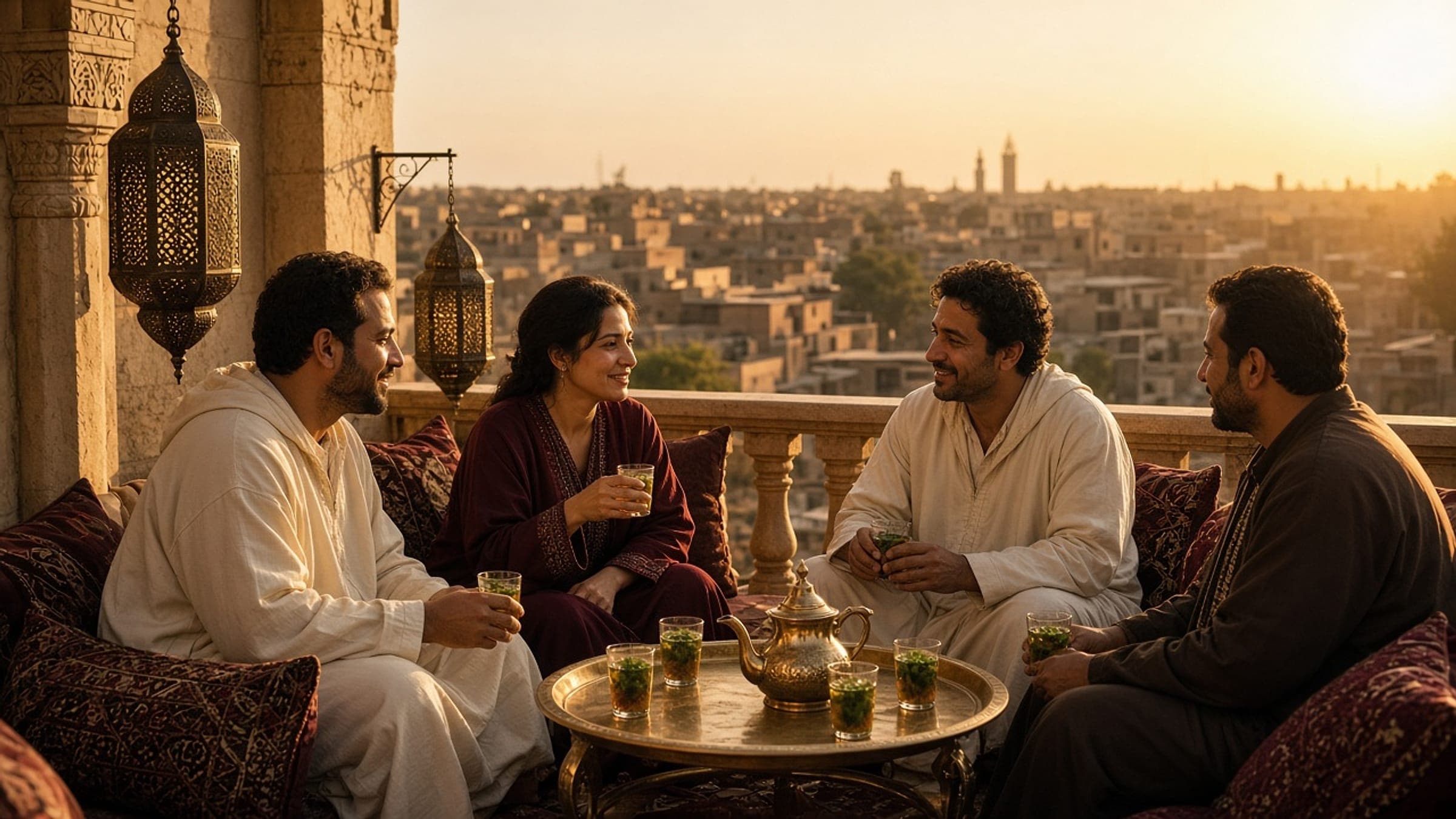

Arabic culture isn’t one recipe, one accent, or one way of celebrating. It spans communities across many countries and generations, with distinct regional histories, faiths, dialects, and family traditions. For Arab Americans, cultural life often includes both at once: the languages spoken at home and the favorite shows on TV, the holiday that needs a day off work and the one that fits into an evening after it.
You don’t need a special occasion to explore that richness. Start with a phrase, a song, or an invitation to the table. Here are seven everyday ways to experience Arabic culture and traditions, and notice how Arab American communities continue to shape life and pop culture in the U.S.
1. Learn a phrase, then listen for its story
A greeting can be a small opening into a bigger conversation. In Egyptian Arabic, ahlan is a warm “hello” or “welcome.” Shukran means “thank you.” You’ll hear different words and pronunciations across Arabic dialects, so treat any phrase as a starting point, not a universal key.
Try learning one expression a week. Write it down, listen for how a fluent speaker says it, and use it in a real exchange when appropriate. Notice how Arabic and English move together in some families, sometimes within one conversation, sometimes within one sentence. Multilingual life isn’t always a neat translation exercise. It can be a living bridge between relatives, generations, and communities.
Midan’s Phrase of the Day offers an English–Egyptian Arabic phrase with pronunciation help and an example. You can also explore phrases from other cultures. A gentle reminder: language learning is practice, not a performance.
2. Make room at the table, and ask what the dish means
Food carries memory, but it doesn’t tell the same story in every home. A dish might be tied to a holiday, a place, a family member, or simply a Tuesday when everyone was hungry. Ask who taught the recipe, what changes from household to household, or which ingredient makes it feel like home.
You might encounter kahk, Egyptian cookies often associated with Eid, or qatayef, filled pancakes enjoyed during Ramadan. A family might serve these alongside dishes shaped by life in the U.S. There’s no contradiction in that. A table can hold more than one tradition, and sometimes more than one Thanksgiving side dish.
If you’re sharing food, learn a few basics about the occasion and follow your host’s lead. Dietary practices vary, and not every Arab person follows the same religious customs. The most useful question is often the simplest: “Would you tell me about this dish?”
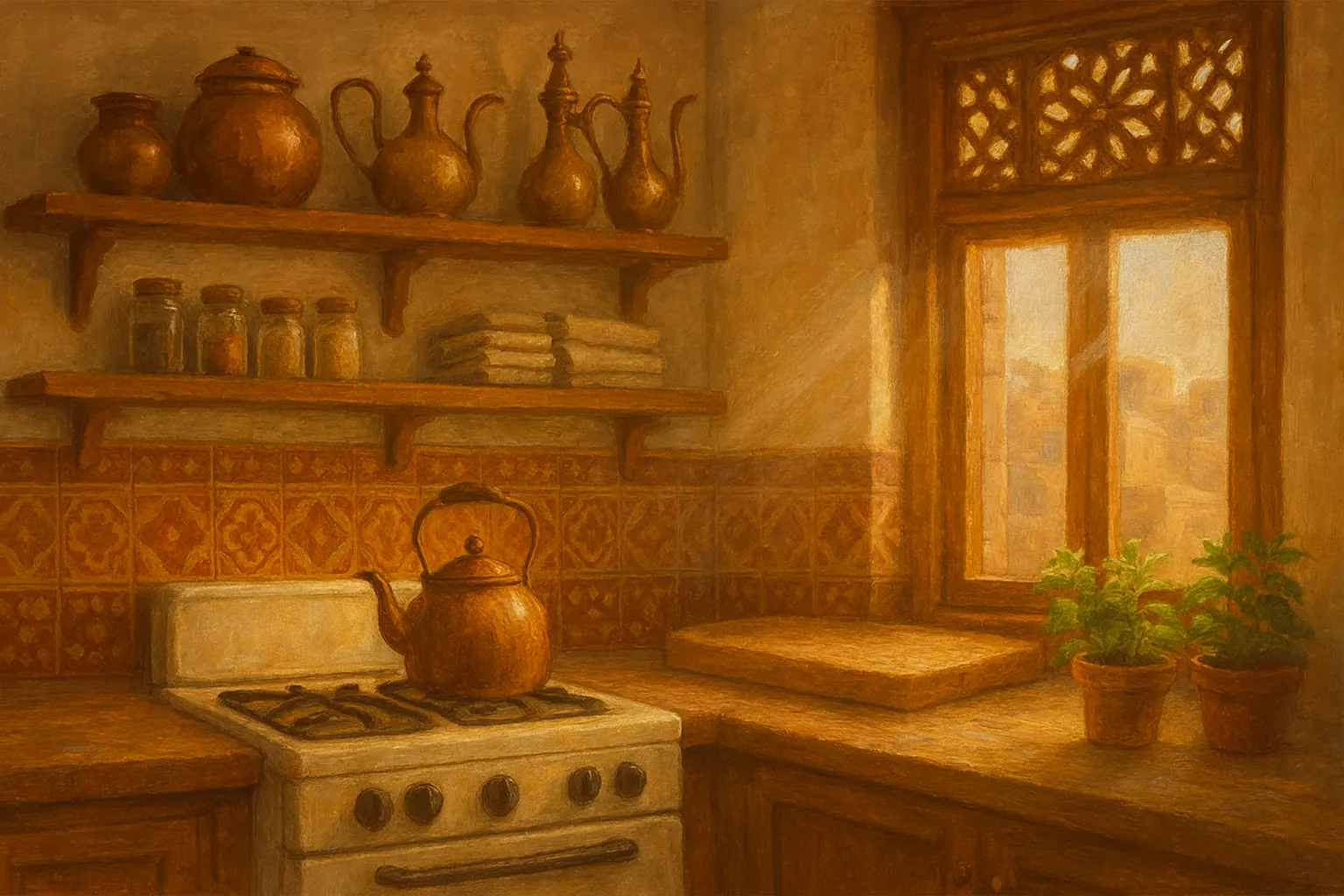
At Midan’s Holiday Kitchen, Teta Malika introduces recipes through their seasonal and cultural context. The idea is simple: story, then cook, then share.
3. Practice hospitality in everyday ways
Hospitality is often expressed through small acts: offering tea or coffee, checking whether someone has eaten, making space for another chair, or sending a guest home with leftovers — usually after they’ve insisted they couldn’t possibly, and long after the meal ended. The exact customs differ by household. The welcoming instinct is the part worth noticing.
You can bring that spirit into your own routine. Invite someone for tea. Offer a snack without making a fuss. If you’re the guest, accept what feels comfortable and ask if you’re unsure about a custom. Hospitality is not a test you need to pass. It’s a way of saying, “There’s room for you here.”
This is one place where cultural traditions connect naturally with broader American life. A potluck, a backyard gathering, a post-game snack, and a holiday dinner can all become opportunities to share, not just food, but the stories that come with it.
4. Listen across music, memory, and language
Music can carry a sense of home across an ocean, or across a city. The Arab American National Museum’s account of Arab migrants building community through music describes how recordings helped people recreate familiar sounds and gather with one another in the U.S. Instruments such as the oud and ney appear in many musical traditions, while Arab American artists continue to make music that blends inherited influences with contemporary sounds.
Try listening with curiosity rather than searching for one sound that represents everyone. Pick a song, find the lyrics or a translation, and notice what you hear: the rhythm, the instruments, the vocal style, or a line that stays with you. Then add a song from your own life to the conversation.

Midan Fusion makes that exchange participatory: members can sing solo or in a duet, in a language they grew up speaking, are learning, or both. Explore Midan Fusion as a place to share the song’s story as well as its sound.
5. Watch Arab American stories alongside the pop culture you already love
American entertainment is part of everyday culture, too. Arab American creators bring their perspectives to comedy, film, television, music, and visual art: stories that can move between family life, humor, belonging, and the complicated business of finding home.
Palestinian American comedian and actor Mo Amer is one example. The Arab American National Museum has written about his work and the way the series Mo brings Palestinian American life into a wider TV conversation. Seek out the museum’s piece on Mo Amer, then notice how a character’s everyday details can make a world feel more fully human.
It’s also worth looking critically at older portrayals. The museum’s exhibition “A is for Arab: Stereotypes in U.S. Popular Culture” examines how film, comics, and other media have often relied on harmful caricatures. Enjoying pop culture and asking who gets to tell the story can go hand in hand.
6. Explore art as a conversation, not a costume
Arab and Arab American art is not one look or subject. Artists work across painting, photography, design, writing, film, and more: drawing on personal experience, community histories, and contemporary life. A useful way to engage is to spend time with a specific artist or work rather than treating “Arab art” as a single style.
Visit a museum exhibition, find a short film, browse a local gallery, or follow an artist whose work catches your eye. Ask what the work makes visible: a neighborhood, a memory, a question, a joke, or a future someone is imagining. Art can invite you in without asking you to reduce a whole culture to a symbol.
If you’re making something yourself, try a small creative prompt: illustrate a family saying, make a playlist cover, or sketch a meal that brings different parts of your life together. Share the context along with the work. The story matters.
7. Build a small ritual that connects cultures
Cultural learning lasts longer when it becomes part of ordinary life. Not a big commitment — a small ritual, a few minutes each week: learn a phrase, make a recipe, listen to an artist, watch a film, or ask someone in your community about a tradition they enjoy.
You can connect it with something familiar from American culture, too. Pair a family recipe with a favorite game-night snack. Trade playlists. Compare how different households mark the end of a busy week. The point isn’t to claim two traditions are identical. It’s to notice where people find shared meaning, and respect where experiences differ.
Midan’s Sufra explores connections between food traditions without treating fusion as a novelty act. Its focus is on the practical things cuisines can share: ingredients, techniques, and the pleasure of eating together.
Culture is something we practice together
Arabic culture and traditions are not frozen in the past. They live in words spoken at home, recipes adapted for a new kitchen, songs shared across generations, artists making work on their own terms, and Arab American stories finding new audiences in American entertainment.
Start small. Ask a thoughtful question. Listen closely. Share what you know, and make room for what you don’t. There’s no single right way to begin, just another chance to meet around culture, questions, and craft.
Further reading
- The Arabs: A History by Eugene Rogan. A sweeping, readable history that gives everyday culture its deep backstory.
Some links are affiliate links; Midan may earn a small commission at no cost to you. Learn more.
If you’d like a welcoming place to keep exploring language, food, music, art, and everyday cultural learning, you can look around Midan Shady Sphere. Take your time; the table has room.