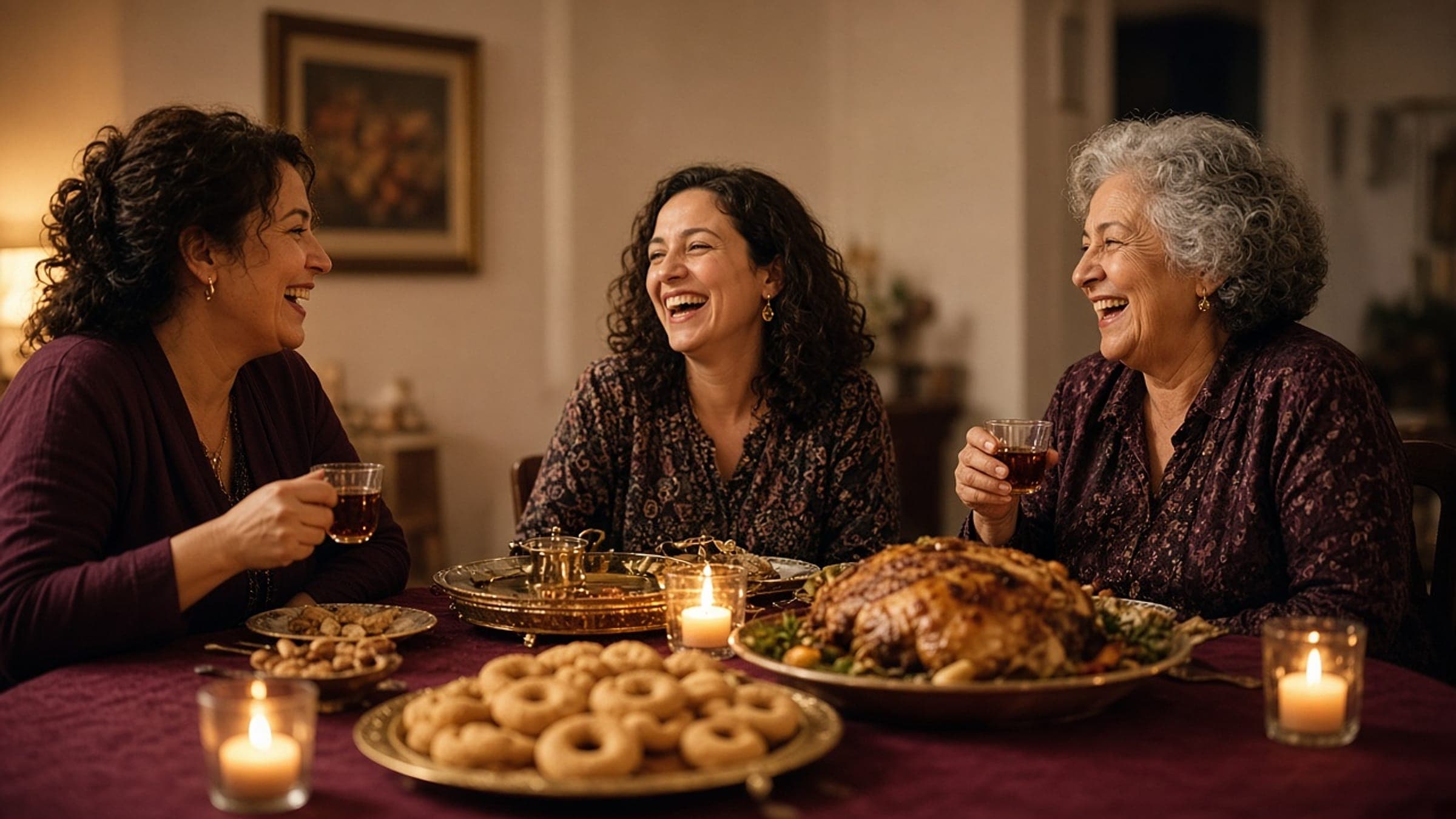
Late fall has a way of filling the calendar with family: Thanksgiving dinners, long weekend visits, a cousin's engagement, an aunt who calls "just to check" and stays on the phone for an hour. For many people who grew up with Arabic at home, these gatherings bring a familiar feeling. You understand almost everything. Then someone asks you a direct question, and your mouth answers in English before your brain has been consulted.
If that's you, welcome. You're a heritage speaker: someone who grew up hearing (and maybe speaking) a family language, usually alongside a dominant one like English. It's a common experience, and it's not a failure. Researchers and educators treat heritage learners as their own group with their own strengths. The National Heritage Language Resource Center at UCLA and the Alliance for the Advancement of Heritage Languages in America both exist because this path is shared by so many families.
Here are a few practical ways to use this season's gatherings as low-pressure practice.
1. Know which Arabic is at your table
There's no single "Arab" household, and there's no single Arabic either. Your grandmother's Egyptian Arabic, your uncle-by-marriage's Lebanese, and your friend's Moroccan Darija can sound like neighbors who occasionally need an interpreter. Modern Standard Arabic, used in news and formal writing, is different again.
So don't measure yourself against the wrong yardstick. If your family speaks Egyptian, the goal at dinner isn't sounding like a news anchor. It's saying "tislam eedik" (bless your hands) after the molokhia and meaning it. Midan's Phrase of the Day focuses on everyday English–Egyptian Arabic with pronunciation help, which is exactly the register most family kitchens run on.
2. Pick one "table phrase" a week before the big day
Cramming doesn't work any better for dialect than it did for chemistry. Instead, choose one phrase a week between now and Thanksgiving and use it on purpose:
- A compliment for the cook
- A polite "I'm full, really" (good luck; it rarely works)
- A question that invites a story: "How did you learn to make this?"
Three or four phrases, used for real, will carry you further than a vocabulary list you never say out loud.
3. Ask for the story, not the grade
Many heritage speakers carry a little embarrassment, often from a relative who laughed at a mispronunciation years ago. One gentle reframe: ask your elders to teach rather than test. "How would you say this?" lands differently from waiting to be corrected.
Recipes are a natural doorway. Ask about a dish in Arabic, even partly, and let the answer come back in whatever mix of languages feels natural. Teta Malika's Holiday Kitchen is built on the same idea: story first, then cook, then share. And if your family's Thanksgiving table holds turkey next to stuffed grape leaves, Sufra is a fun place to think about how traditions can share a plate without either one becoming a novelty.
4. Let code-switching be a feature
Switching between Arabic and English mid-sentence isn't "broken" language. It's how a lot of multilingual families actually talk. The U.S. Census Bureau tracks language use at home precisely because so many households live in more than one language.
Use that flexibility as a ladder. Start a sentence in Arabic, finish it in English, and next time push the switch a few words later. Progress can be measured in words, not perfection.
5. Practice hospitality out loud
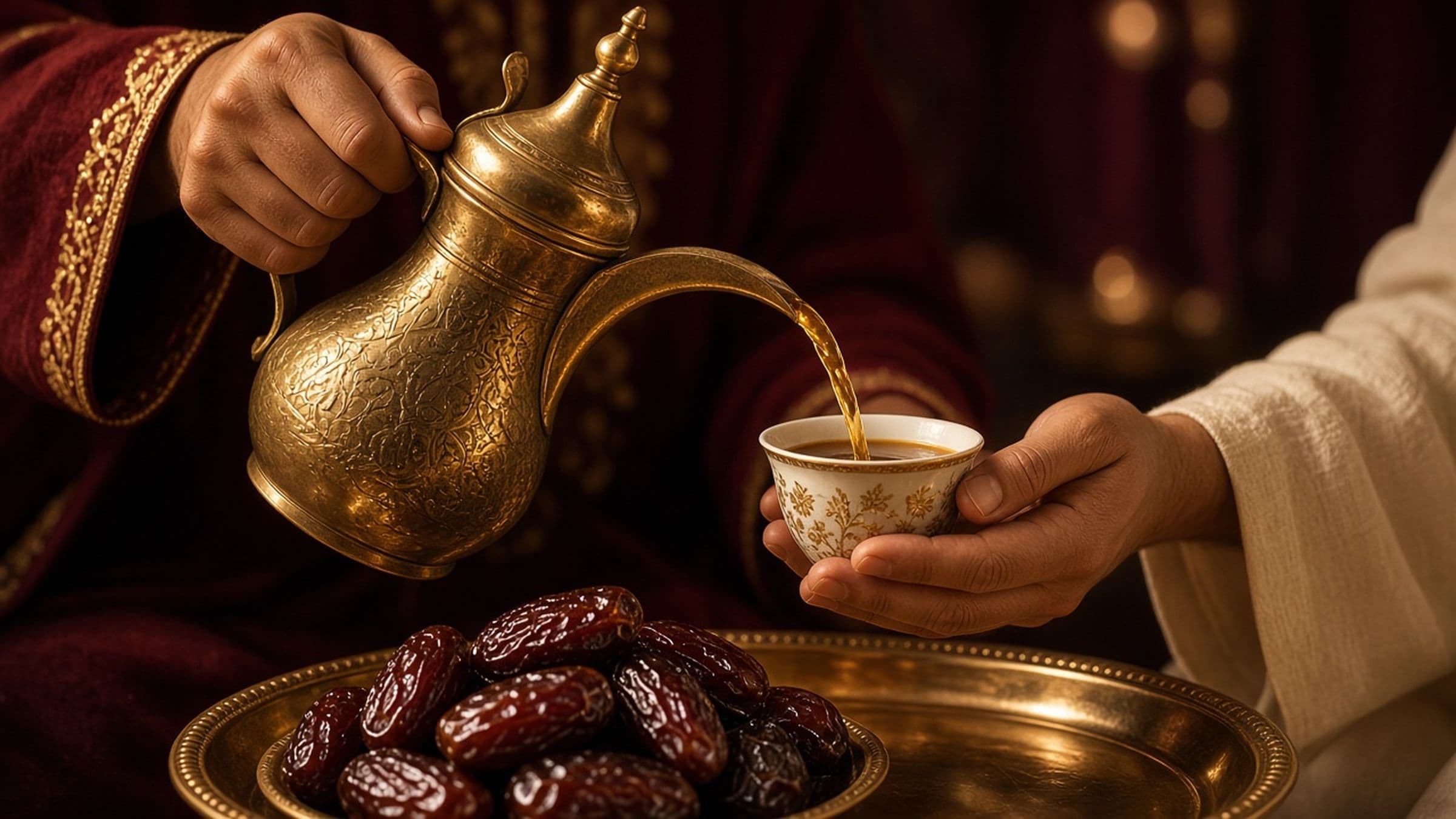
Hospitality is one of the easiest places to use a family language, because so much of it is ritual phrasing: welcoming a guest, offering tea a third time, insisting someone take leftovers. Customs vary by region and by household, so watch how your own family does it and borrow their words.
If you want a rehearsal space before the real thing, Midan's Diyafa is all about the culture of welcoming, and the club Tutor can help you practice the exact conversations you're nervous about. No one there will mention that you used to say "shukran" with a Texas accent.
6. Make it a game, not a homework assignment
Language sticks better when you're having fun. A few ideas for the long weekend:
- Play a family trivia round with questions in Arabic and answers in either language.
- Sing along to a song your parents loved, then ask what a line means. Midan Fusion lets you share a song in the language you grew up with, the one you're learning, or both.
- Try Habibi Dash, Midan's game set in Cairo. Chapter 1 (levels 1–3) is free, and it's a sneaky way to pick up street-level vocabulary.
Your Arabic is still yours
Heritage languages aren't museum pieces. They live in kitchens, phone calls, inside jokes, and the way your aunt says your name. Whatever your level, showing up and trying is the part your family is most likely to remember.
Further reading
- How Does It Feel to Be a Problem? by Moustafa Bayoumi. Seven young Arab Americans in Brooklyn, a moving portrait of growing up between two worlds.
- Raising a Bilingual Child by Barbara Zurer Pearson. Practical, encouraging advice for keeping a family language alive across generations.
Some links are affiliate links; Midan may earn a small commission at no cost to you. Learn more.
If you'd like a friendly place to keep practicing after the leftovers are gone, Midan Shady Sphere offers a free 3-day trial plus Habibi Dash Chapter 1. The full club, including Phrase of the Day, Holiday Kitchen, Diyafa, Tutor, the Passport Wheel, and Field Trips, is $15/month or $150/year. Take a look around whenever you're ready. The table has room.