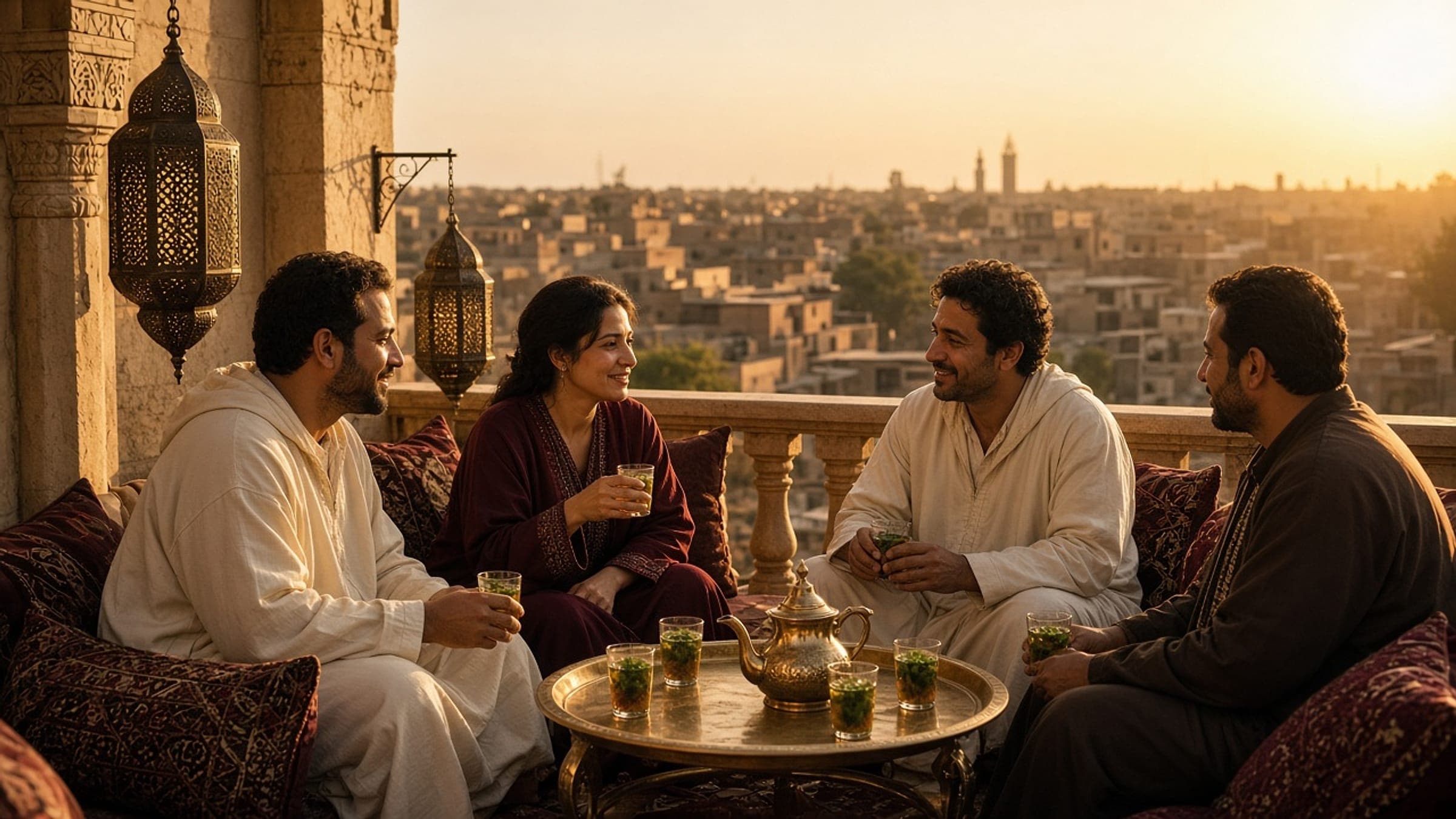
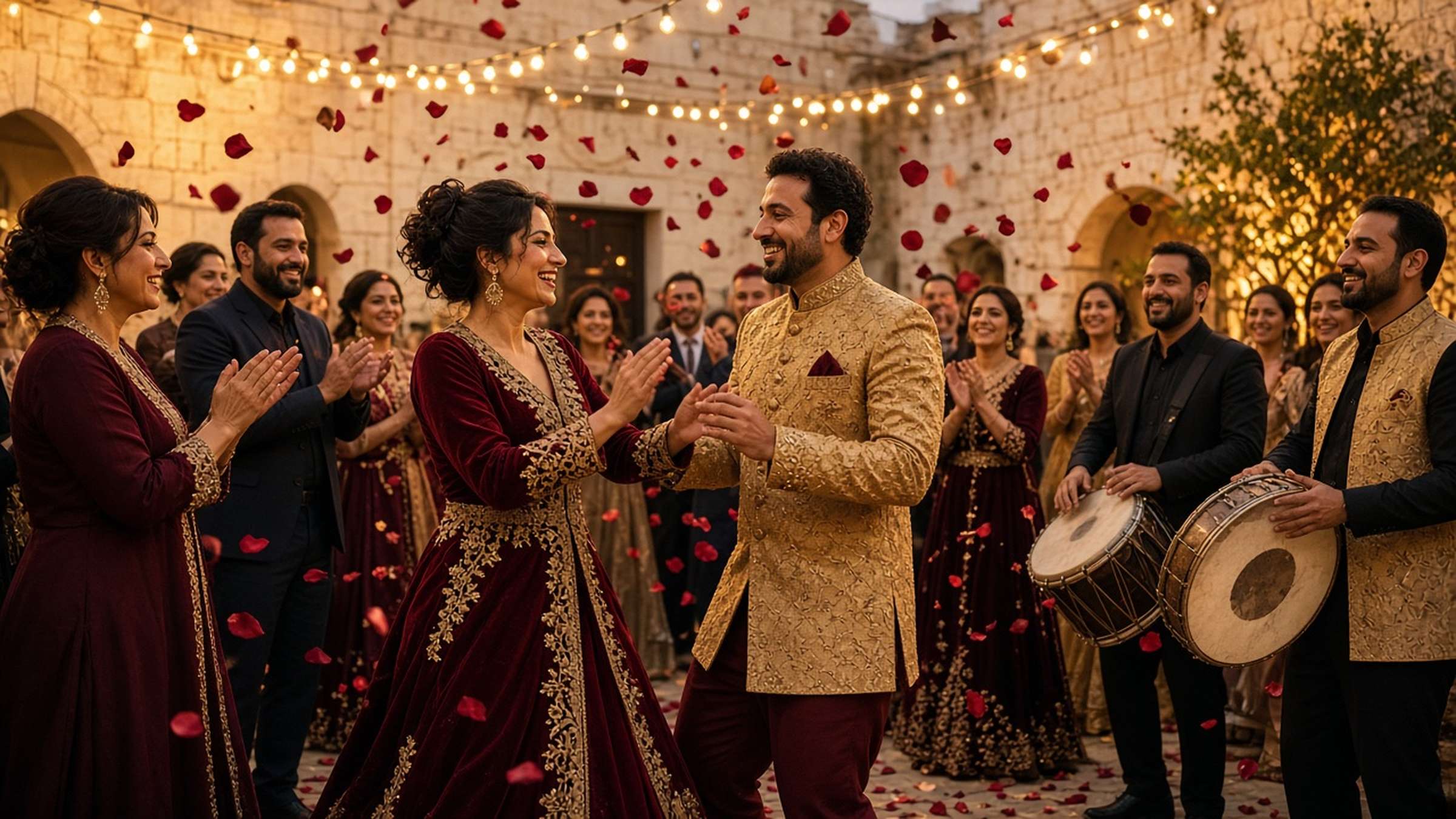
If you've been invited to an Arab wedding, clear your schedule, wear comfortable shoes and eat before you go, just kidding, there will be plenty of food. Celebrations across the Arab world are loud, joyful and generous, and they rarely end on time.
Customs vary widely by country, region, religion and family, so think of this as a friendly map, not a rulebook.
1. The entrance: the zaffa
In Egypt, the Levant and beyond, many weddings open with a zaffa: a musical procession of drums, horns, dancers and sometimes performers carrying candelabras, ushering the couple in. Expect clapping, singing and the joyful, trilling ululation often called zaghareet. If you're not sure what to do, clap along and smile. You're doing great.
2. The henna night
Before the wedding, many families hold a henna night, a celebration where the bride, and sometimes guests, have designs painted on their hands with henna. Traditions range from North Africa to the Gulf and beyond, with different music, outfits and symbolism in each. In some communities the groom has his own gathering too. If you're invited, it's often a more intimate, music-filled evening, and a great chance to meet the family.
3. The dance floor: dabke and friends
In the Levant, it's hard to imagine a celebration without dabke, a line dance of linked arms and stomping steps, led by someone waving a handkerchief. You'll be pulled in. Resistance is futile. Watch the feet of the person next to you and you'll get it within a few rounds. Other regions have their own dances and rhythms, from Khaleeji hair-swaying dances to Maghrebi chaabi.
4. Phrases that work at any celebration
- "Mabrouk!" Congratulations! Works for weddings, graduations, new jobs and new cars.
- "Alf mabrouk!" A thousand congratulations, for when one isn't enough.
- "Allah yetamem bil khair" May God complete it with goodness, a warm wish for the couple.
- "Ou'balak" (Levantine): May it be your turn next, said by aunties with intent.
Practice the pronunciation with Midan's Phrase of the Day before the big night.
5. Guest etiquette in a nutshell
Dress up; celebrations are often formal. Gifts vary by community, from money in an envelope to gold jewelry from close relatives, so ask a friend what's typical. Greet the families, eat what's offered, and don't leave before the cake if you can help it.
6. Beyond weddings
The same joy shows up at Eid gatherings, engagements, births and graduations. For celebration food with stories, visit Teta Malika's Holiday Kitchen, and if your family celebrates across cultures, Fusion and Sufra are made for you.
Mabrouk in advance
Arab celebrations are an open invitation to join in. Clap, dance badly, eat well and say mabrouk often.
If you'd like to keep exploring, Midan Shady Sphere offers a free 3-day trial plus Habibi Dash Chapter 1 (all of Cairo, levels 1–3). The full club, including Holiday Kitchen, Phrase of the Day, Diyafa, Sufra, Tutor and Field Trips, is $15/month or $150/year. Join the celebration whenever you're ready.