In many Arab homes, the kettle goes on before the coat comes off. A hot drink is often the first sentence of hospitality, and the way it's made, poured and refused says a lot about where you are.
Our food post mentioned the coffee ritual in passing. Here's the full tour, cup by cup.
1. The Gulf: gahwa, cardamom and dates
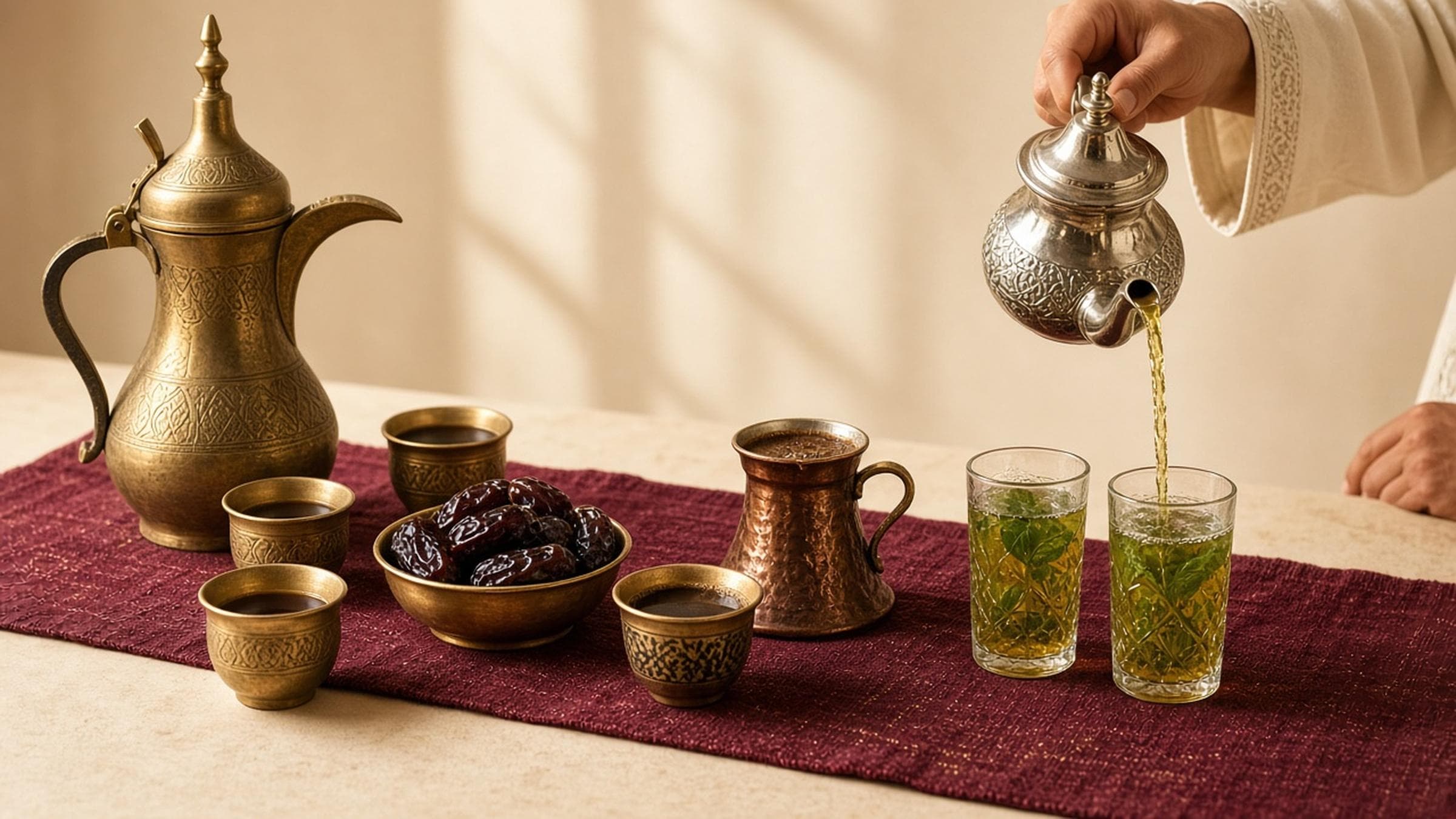
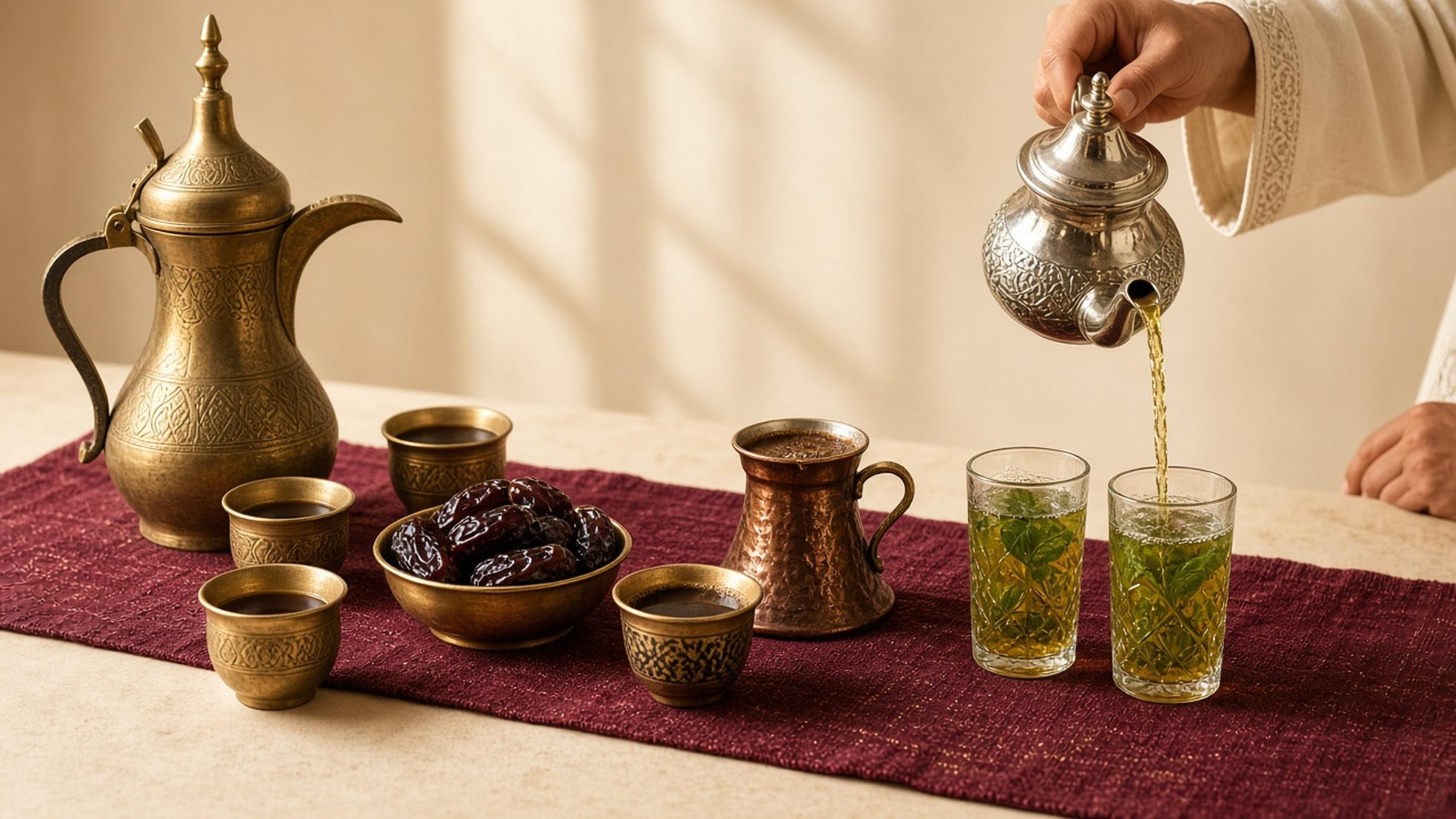
Arabic coffee, often called gahwa in the Gulf, tends to be lightly roasted and spiced, frequently with cardamom and sometimes saffron, then poured from a long-spouted dallah into small handleless cups. Dates usually come along for the ride. Cups are filled only partway and refilled often; a gentle shake of the cup is the common signal that you've had enough.
2. Egypt and the Levant: thick, rich, and sweetened your way
In Egypt and across much of the Levant, you'll often find coffee brewed in a small pot (a kanaka in Egypt, a rakwe in Lebanon) in the style many know as Turkish coffee: finely ground, unfiltered and foamy on top. Order it sada (no sugar), mazbout (medium) or ziyada (extra sweet). Saying "mazbout" with confidence is an instant mood-lifter for any café owner.
Bonus: in some families, the grounds left in the cup are turned over for playful fortune-telling. Treat it as fun, not forecast.
3. North Africa: mint tea, poured from on high
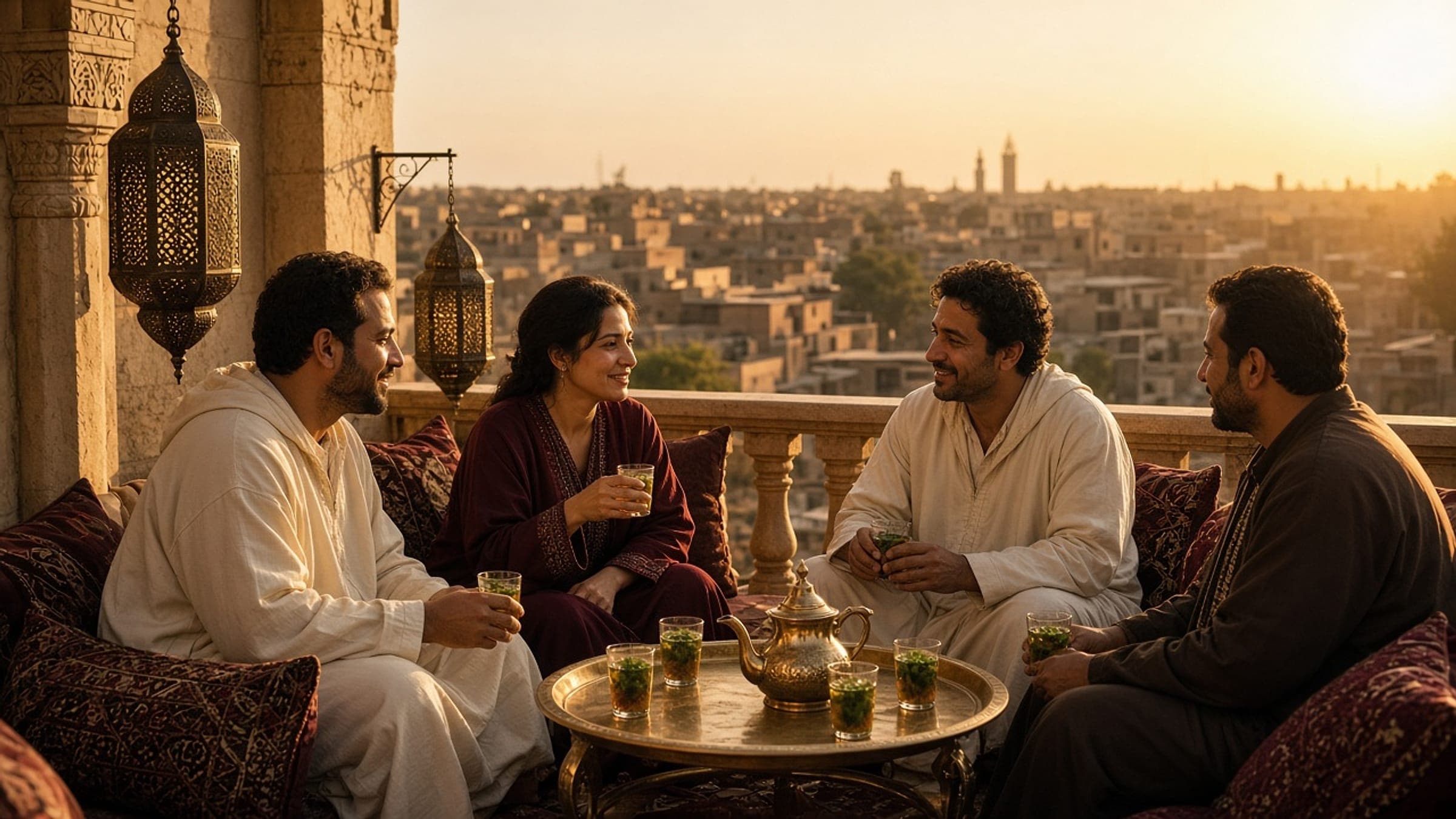
In Morocco, Algeria, Tunisia and beyond, Maghrebi mint tea, usually green tea with fresh mint and sugar, is a daily welcome. It's often poured from a height to create a little foam, which also looks extremely cool. Many hosts will pour a few rounds. Accepting is part of the visit.
4. Tea is everywhere else too
Black tea with sage (maramiya) or mint is common in Palestinian and Jordanian homes, and strong, sweet tea in small glasses is a café staple from Cairo to Baghdad. Every region has its own "this is how we do it," which is exactly what makes asking fun.
5. Guest tips for every cup
- Accept at least one cup if you can. It's a welcome as much as a drink.
- Hold the cup with your right hand when in doubt; it's a widely appreciated courtesy.
- Ask how it's made. Hosts are often proud of their blend.
- Learn the thank-yous: "shukran," and in Egypt, "tislam eedak/eedik."
Midan's Diyafa explores these hospitality customs in depth. For the treats that come with the coffee, Teta Malika's Holiday Kitchen has seasonal recipes with stories attached, and Sufra is perfect for tables that blend traditions.
One more cup?
Coffee and tea rituals are a small window into a big idea: you're welcome here. Next time someone offers a cup, say yes, and ask for the story.
Further reading
- Uncommon Grounds by Mark Pendergrast. The story of coffee from Yemen and Ottoman coffeehouses to your corner cafe and the global economy behind it.
- Coffee: A Global History by Jonathan Morris. A compact, fascinating history of the bean that connected Arab ports to the world.
Some links are affiliate links; Midan may earn a small commission at no cost to you. Learn more.
If you'd like to keep exploring, Midan Shady Sphere offers a free 3-day trial plus Habibi Dash Chapter 1 (all of Cairo, levels 1–3). The full club, including Holiday Kitchen, Phrase of the Day, Diyafa, Sufra, Tutor and Field Trips, is $15/month or $150/year. Pull up a chair whenever you're ready.