
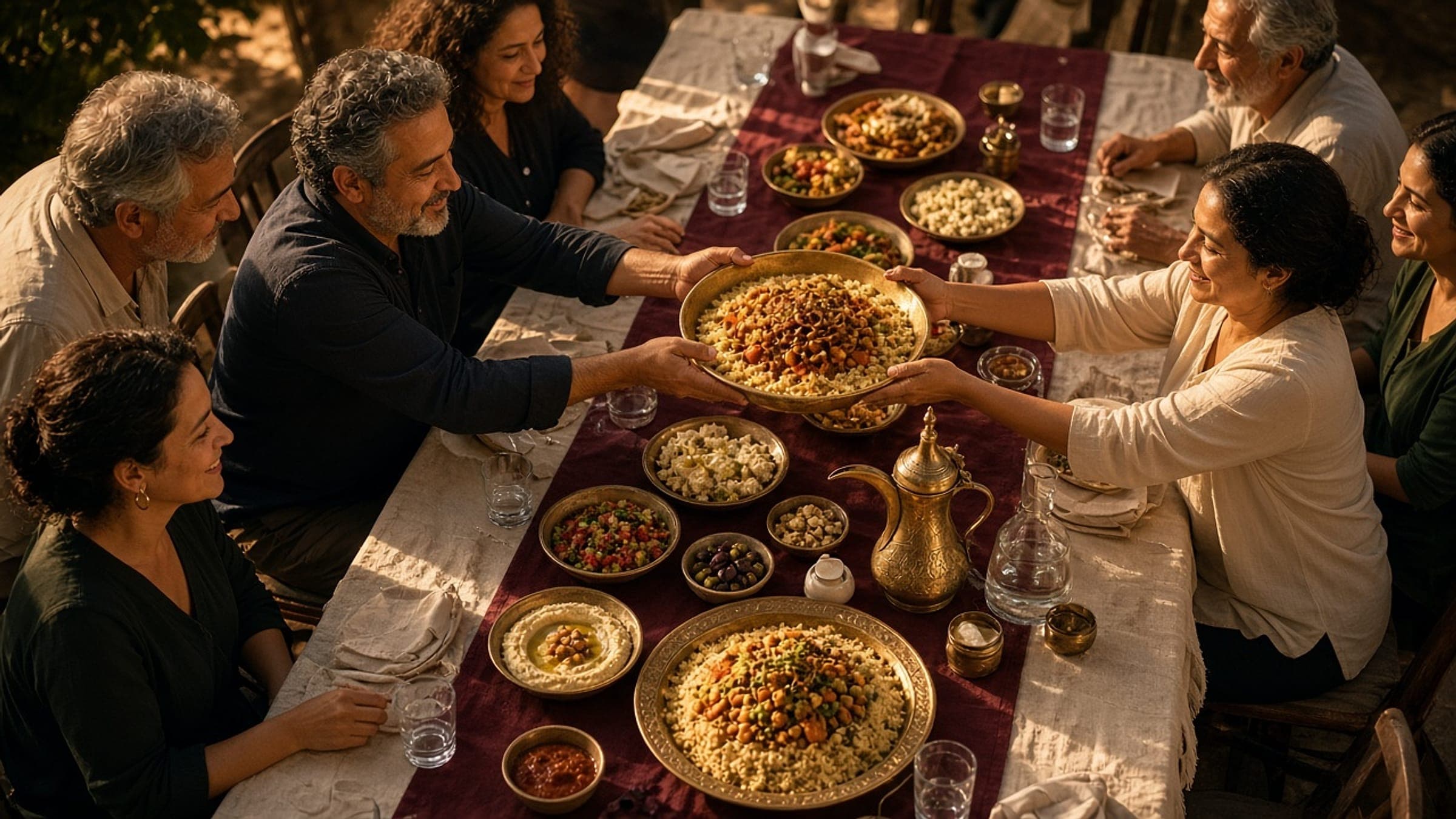
Ask ten people what "Arab food" is and you'll get eleven answers, plus at least one argument about whose grandmother makes it right. That's the point. Food across the Arab world is a map of regions, rivers, trade routes and family habits, not a single menu. Egyptian, Levantine, Gulf and North African kitchens share some ingredients and very few rules.
Here are a few everyday ways to explore that variety, pick up some language along the way, and become the guest everyone wants back.
1. Learn the regions before the recipes
A quick mental map helps. Egyptian cuisine leans on legumes, rice and bread: think koshari, ful medames and molokhia. Levantine cuisine, from Lebanon, Syria, Jordan and Palestine, is the home of the mezze spread many Americans know first. North African tables bring couscous and tagines, while Gulf kitchens have their own spiced rice dishes.
None of these boxes are airtight, and families cross borders all the time. But knowing that falafel might be made from fava beans in Cairo and chickpeas in Beirut makes you a far more interesting dinner companion.
2. Collect "kitchen words," one dish at a time
Food vocabulary is the friendliest kind. It's concrete, you can point at it, and it comes with a reward. Start small:
- The name of a dish you love, said the way the cook says it
- "Bil hana wish-shifa", the Egyptian way of wishing someone enjoyment of their meal
- "Tislam eedik" (bless your hands), the compliment every cook deserves
Midan's Phrase of the Day is full of this kind of everyday English–Egyptian Arabic, with pronunciation help so you don't accidentally insult the stuffed vine leaves.
3. Ask for the story behind the plate
The best question at any table is "Who taught you to make this?" Recipes travel with people, and the answers are often family history in miniature. One household's molokhia has garlic fried just so; another swears by a different green entirely.
That's the spirit of Teta Malika's Holiday Kitchen: story first, then cook, then share. With the holidays coming, it's a nice way to learn a dish with its context attached.
4. Respect the coffee ritual
In many homes, coffee isn't just a drink. It's a welcome. Arabic coffee traditions differ across regions: a light, cardamom-scented pour in small cups in parts of the Gulf, a thick, sugared Turkish-style cup in many Egyptian and Levantine homes. Watch your host, accept graciously, and don't worry if you're not sure when to stop. Asking is always fine.
Midan's Diyafa explores this culture of hospitality, from the first greeting to the third (insistent) offer of more food.
5. Let traditions share the plate
Arab American tables often hold more than one tradition: kibbeh beside mac and cheese, baklava next to pumpkin pie. That's not confusion. It's what living in more than one culture tastes like. Sufra is a fun place to explore how dishes from different backgrounds can meet without either one becoming a gimmick.
6. Turn dinner into a game
If you want a playful warm-up, Habibi Dash drops you into Cairo, where food vocabulary shows up on the street the way it does in real life. Chapter 1 (levels 1–3) is free. And if you're feeling adventurous, spin the Passport Wheel and cook something from wherever it lands.
Pull up a chair
You don't need to be an expert to enjoy Arab food respectfully. Curiosity, a few kind words, and a willingness to take seconds will get you very far.
Further reading
- The New Book of Middle Eastern Food by Claudia Roden. The beloved kitchen bible, full of recipes and the stories and memories behind them.
- Zaitoun by Yasmin Khan. Warm, generous Palestinian home cooking, told through the people who cook it.
- Falastin by Sami Tamimi and Tara Wigley. Bright, modern recipes rooted in Palestinian tradition, ideal for your next shared table.
Some links are affiliate links; Midan may earn a small commission at no cost to you. Learn more.
If you'd like to keep exploring, Midan Shady Sphere offers a free 3-day trial plus Habibi Dash Chapter 1. The full club, including Holiday Kitchen, Phrase of the Day, Diyafa, Sufra, Tutor and Field Trips, is $15/month or $150/year. Come have a look whenever you're hungry.