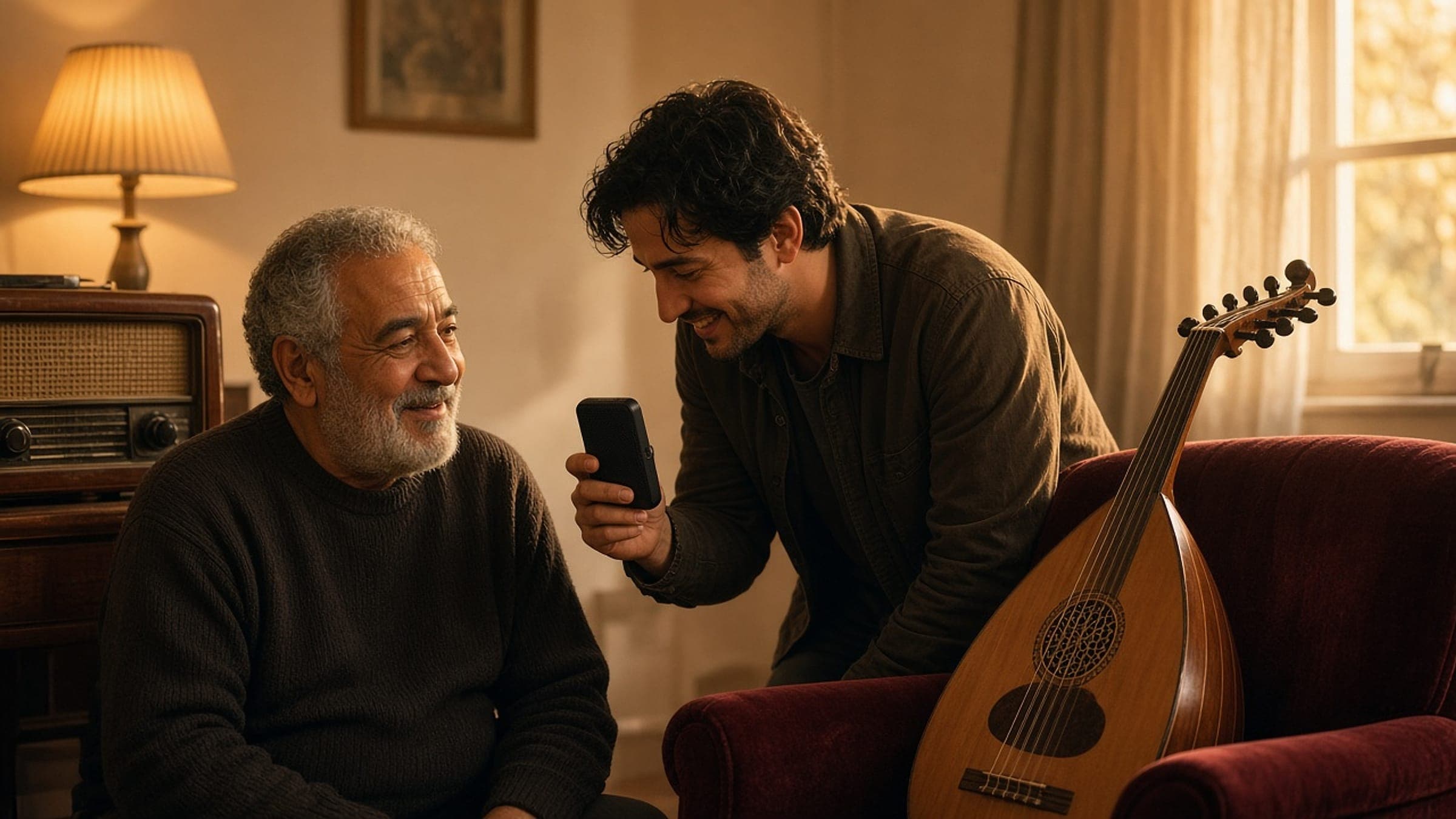
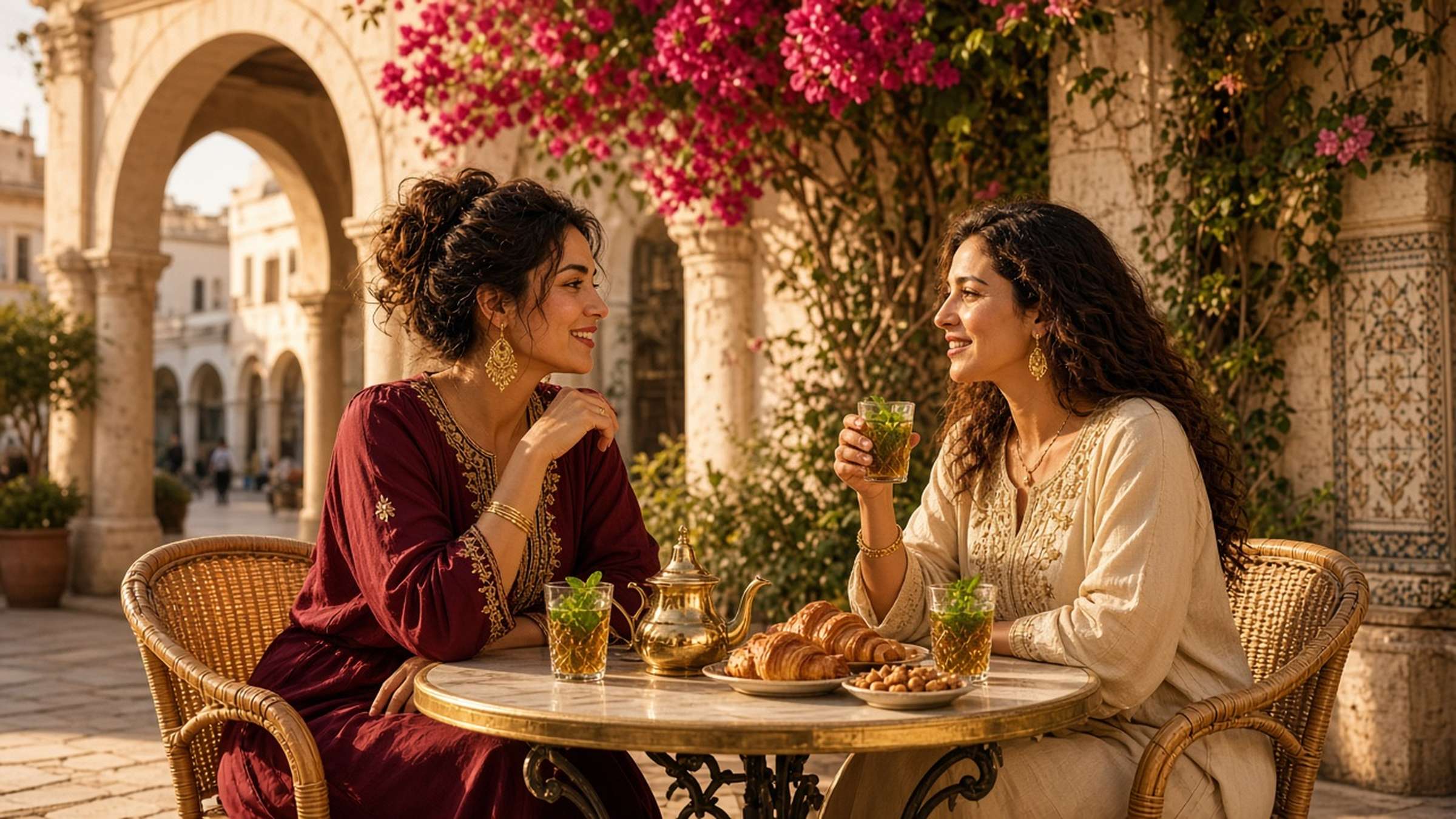
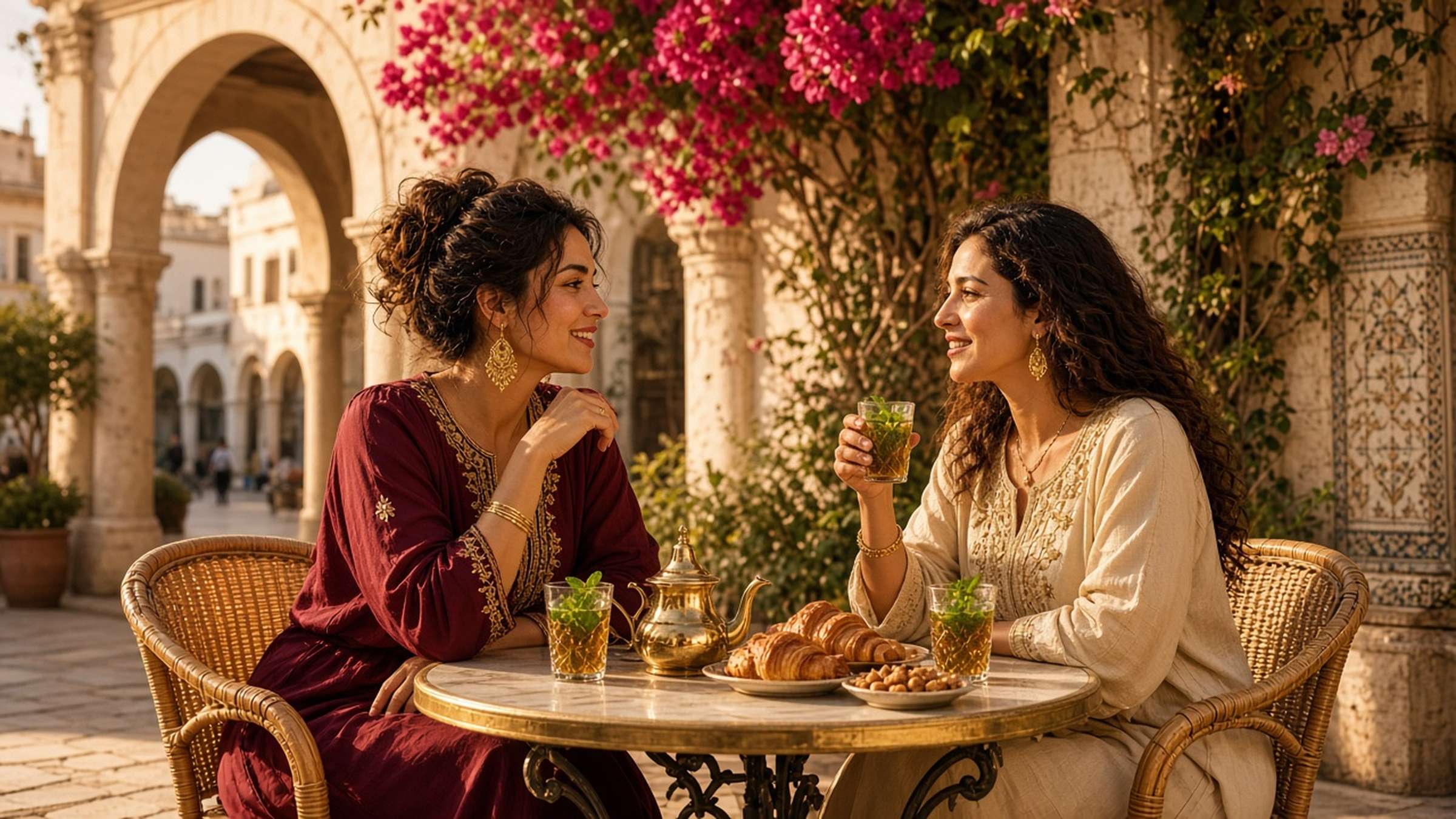
"Hi, kifak, ça va?" is a real greeting you might hear in Beirut, and it covers three languages in four words. In Casablanca, a friend might start a story in Darija, switch to French for the punchline, and end with "khalas." In both cases, nobody is confused, except maybe the visitor.
Our heritage-speaker post was about answering in English at the family table. This one is about the opposite superpower: mixing languages on purpose.
1. What code-switching actually is
Linguists call moving between languages in a conversation code-switching. It's common anywhere people live with more than one language, and it often follows patterns: switching for emphasis, for a joke, to quote someone, or because one language simply has the better word.
It isn't "broken" speech. It takes real fluency to know which language fits which moment.
2. North Africa: Darija, French, Amazigh and more
In Morocco, Algeria and Tunisia, everyday Maghrebi Arabic, often called Darija, carries influences from Amazigh (Berber) languages, French, Spanish and others. French remains widespread in education, business and media in parts of the region; the International Organisation of La Francophonie counts several North African and Middle Eastern countries among its members and observers. Many people also speak an Amazigh language at home. The result is a soundscape where one sentence can travel quite a distance.
3. The Levant: the famous trilingual hello
In Lebanon especially, mixing Arabic, French and English is part of daily life for many people, and the "Hi, kifak, ça va?" greeting has become a beloved shorthand for it. Not everyone speaks this way, and patterns vary by city, school and generation, so treat it as a snapshot, not a rule.
4. Arabizi: when Arabic borrows the keyboard
Texting brought another twist. Arabizi writes Arabic with Latin letters and numbers: a "3" for the sound ʿayn, a "7" for a breathy ḥa. "7abibi" is very much a thing. If you've ever seen numbers in the middle of an Arabic word in a group chat, now you know.
5. How to enjoy it as a learner
- Listen for the switch. Notice when and why a speaker changes language. It's usually a clue about emotion or emphasis.
- Collect bridge words. Words like yalla, khalas and habibi show up across dialects and across languages.
- Don't apologize for mixing. If you only know the Arabic word for "tea," use it. That's how many multilingual people learned too.
Midan's Phrase of the Day offers English–Egyptian Arabic phrases with pronunciation help, and you can explore phrases from other cultures too. If you love seeing how cultures blend, Fusion is built exactly for that. And a Tutor session is a judgment-free place to practice switching on purpose.
Yalla, mix it up
Code-switching is what happens when people carry more than one home inside them. Listen closely and you'll hear history, humor and identity, sometimes all in one sentence.
Further reading
- Raising a Bilingual Child by Barbara Zurer Pearson. Down-to-earth guidance for families mixing languages at home.
Some links are affiliate links; Midan may earn a small commission at no cost to you. Learn more.
If you'd like to keep exploring, Midan Shady Sphere offers a free 3-day trial plus Habibi Dash Chapter 1 (all of Cairo, levels 1–3). The full club, including Holiday Kitchen, Phrase of the Day, Diyafa, Sufra, Tutor and Field Trips, is $15/month or $150/year. Come practice with us whenever you're ready.